Stator Windings Neutral Inversion Case Study
Authors
Claude HUDON, Rémi TAGHIZAD, Gabriel GOSSELIN, Clément DUROCHAT - DMI Energy, Canada

Summary
Over the past twenty years DMI Energy has performed inversion of the neutral star point with phase terminals of several rotating machines. The reasons to perform an inversion are various. In some cases, it is simply to extend the life of the machine, in other the goal is preventing online failure and the consequential revenue losses of performing a rewind in emergency, but it can also be to reduce ozone concentration around the machine when there is a health hazard for the personal. On the machines inverted so far, the procedure was carried out on average after 18 years in operation, but in one case it was done after as little has 6 years because of an obvious manufacturing problem. Usually, since the insulation of the original neutral side was never eroded electrically due to Partial discharge (PD), after inversion the insulation of the new high voltage side is almost in its initial state with its original thickness after inversion. Thus, after inversion life can sometime be extended for several years. However, before proceeding one must make sure that thermal degradation of the ground insulation is not an issue, a polarization and depolarization test (PDC) is thus recommended to make sure that thermal aging is not significant. In such cases, life extension will depend mostly on the measured PD activity after the inversion. Partial discharge results show that although the maximum amplitude (Qmax) generally decreases after the inversion procedure, the benefits are most significant on the apparent discharge current (NQS) which generally decreases more than the Qmax. The type of discharge activity must also be considered and trended over time to keep failure risk at minimum. The main features of eleven case study are presented in this paper but will focus on two of them.
Keywords
Neutral inversion, Partial discharge, Maximum amplitude, Discharge current, Polarization and depolarization current, Visual inspection1. Introduction
Inversion of the neutral star point with the phase lead terminals of rotating machines is a common procedure in the industry, and it is mostly carried out when the leading degradation factor is high partial discharge activity. For machines with intense PD activity, failure can occur after only a few years of operation. One motor was reported to have failed after as little as 5 years in service and was experiencing RTD failure after just one year in operation because of the ozone attack from PD [1]. This procedure is not suited for all machine configurations. For instance, on large hydro generators the phase terminals may be located far away from the neutral terminal exit point and the procedure may be difficult to apply. The inversion procedure should not be used only to extend the life of a machine regardless of its condition and depending on the active stresses: electrical, mechanical or thermal the solution of inverting phase and neutral leads may be an option or not. If the dominant stress is thermal or mechanical and have caused gross delamination of the insulation throughout the winding, the insulation condition may not be sufficient on the neutral side to become phase leads. In such cases the life extension may be at best marginal and life can even reduce.
When rotating machines are operated within temperature specification and that their design and assembly answer the highest standards they will operate for several decades. However, for machines with very intense PD activity life can be substantially reduced. This increases the risk of premature failure which would results in considerable economic losses for the user. In cases of accelerated electrical aging by PD, mainly occurring close to the phase lead of the winding, switching lead end terminals with the neutral point can reduce the failure risk for some years and increase the expected life of the machine. Most of the time, this will give the user enough time to better plan a rewind of the machine during a schedule outage. Other cases where neutral inversion can be beneficial, are those with intense external discharge activity (slot PD, corona at the junction of stress grading or phase to phase discharges) resulting in massive ozone generation. Ozone, a byproduct of PD, can be deleterious for personal working around the unit and will cause a battery of collateral damage to the machine in addition to the direct erosion of the winding insultation. Amongst those damage we have seen extensive oxidation of all metallic surfaces including the magnetic stator core, fins of the heat exchangers, phase lead connections and ozone has caused RTD failures. It will also embrittle and degrade most plastic, insulation, protective paint and O-rings that can lead to leaking of the fire extinguishing system. Millet and al [2] have reported that without implementing this procedure, ozone concentration was so high around several generators in one plant that the user would have to stop the units for health and safety reason during the entire lucrative winter peak season in Canada.
Abnormally high partial discharge activity usually appears after long term aging, but it can also manifest right from commissioning, when manufacturing or assembly is substandard. In such case, early rewind should be discussed with the manufacturer before the end of warranty. The scenario may include, or not, inversion of the neutral point, depending on the intensity of the discharges, their nature, the number of operating hours and the manufacturing time to get a new winding.
Before performing neutral inversion, it is recommended to do an extensive diagnostic of the unit to maximise the chance of life extension. To make sure that overall thermal degradation is not the dominant cause of aging it is recommended to perform a PDC test. If this test shows little thermal aging and PD are intense, inversion can be beneficial. Other tests such as off-line PD and UV camera inspection will also help confirming if a machine is a suitable candidate for inversion. If mechanical degradation from winding vibration is an issue it is recommended to carry out a detailed visual inspection before an inversion to see if loose bars or radial wedges have resulted in signs of fretting at the slot exits.
Finally, it is also mandatory to analyse the phase resolved partial discharge (PRPD) patterns and trend PD activity after an inversion. This will help evaluating PD erosion rate and if there is a change in the pattern, because for the same activity level, the degradation rate will not be the same for all discharge sources. The following paper will review several cases of neutral inversion but will concentrate on the highlights of two of them.
2. Details of rotating machine where inversion was implemented
Over the past 20 years, DMI Energy has carried out several inversions as reported in Table 1. Out of the eleven machines in this table, most are turbogenerators, but there are three motors in this list (machines 3, 4 and 7) and one hydro-generator (machine 10). The average age of machines when inversion was done is 17.8 years, but at least three machines had inversion within less than ten years. Machines 5, 9 and 11 fall in the first period of the well-known bathtub reliability curve. The first period of this curve is defined by a high risk of infant failure. It is followed by the second period of normal life where failure rate is usually relatively low. Finally, the third period of the bathtub curve correspond to wearing out of the unit leading to increasing failure rate with time. Machine 5, 9 and 11 all had very intense slot PD activity early on and had inversion to prevent premature failure. The inversion of machines 5 and 11 was done after eight years of operation, while the inversion of machine 9 was done only six years after commissioning. The PD activity detected after the inversion of machine 5 was much lower than before but crept up with time. It was rewound in 2019, ten years after inversion, which would give it a global lifespan of only 18 years. The inversion of Machine 9 was just implemented in 2025 and although the PD levels are now low, because slot type discharges are still present, we anticipate activity to grow quickly, and in this case, inversion is only a temporary fix to avoid on-line failure. Machine 11 had the highest discharge activity at commissioning and degraded quickly, after inversion activity was still high because ozone had attacked all protective coatings, and it was rewound two years after inversion for a total lifespan of 16 years.
The first inversion in this table was done in 2005 on a turbogenerator that was commissioned in 1992. This machine also had very intense slot discharges at its first PD measurement in 2004 after 13 years in service, when it should be in its normal aging stage. This is why the owner had not plan to rewind the unit. As we will see below, PD activity was saying that the wearing out period already had started, and failure risk was non negligible. The inversion made it possible for the owner to buy enough time to rewind the stator during a planned outage three years later.
Machines 10 is the oldest one in the table to have an inversion after 29 years of operation. This machine was clearly in the third period of the bathtub reliability curve. In this case, the user wanted to extend life for a few years and inversion could give the machine higher reliability than without inversion. This machine is still running without any problem since it was inverted 7 years ago. Each case study is distinct and in addition of intense PD being the main aging mode the decision to carryout inversion depends on several factors: If the unit is strategic or not, if the operation factor is low or simply if budget is available or not. Extending the unit life is an owner’s decision once he is presented with all the facts and risks. Date and age should not be the only criteria to consider and the machine’s diagnostic for all tests must be reviewed carefully in order to recommend the best course of action. For this, detailed analysis of PD results, before and after, and other tests (PDC, Visual inspection, UV camera inspection…) will play a role in the decision process as we will see in the following sections.
| Machine | Type | MVa | kV | Commissioning | Inversion | |||
|---|---|---|---|---|---|---|---|---|
| date | Age at | Years after | rewind | |||||
| Machine 1 | Turbo | 22.7 | 13.8 | 1992 | 2005 | 13 | 3 | 2008 |
| Machine 2 | Turbo | 41.5 | 13.8 | 1996 | 2023 | 27 | 2 | |
| Machine 3 | Motor | 3.7 | 13.2 | 2005 | 2022 | 17 | 3 | |
| Machine 4 | Motor | 3.7 | 13.2 | 2005 | 2021 | 16 | 4 | |
| Machine 5 | Turbo | 36.7 | 13.8 | 2001 | 2009 | 8 | 10 | 2019 |
| Machine 6 | Turbo | 13 | 5.5 | 1997 | 2024 | 27 | 1 | |
| Machine 7 | Motor | 4.6 | 13.8 | 2005 | 2018 | 13 | 7 | |
| Machine 8 | Turbo | 28.8 | 13.8 | 2005 | 2021 | 16 | 4 | |
| Machine 9 | Turbo | 8.87 | 11 | 2019 | 2025 | 6 | 0 | |
| Machine 10 | Hydro | 11.1 | 13.8 | 1989 | 2018 | 29 | 7 | |
| Machine 11 | Turbo | 28.8 | 13.8 | 2006 | 2014 | 8 | 2 | 2017 |
3. Comparison of PD activity before and after inversion
Since inversion is mostly beneficial when the dominant degradation process is electrical, PD measurement is at the forefront of the diagnostic leading to the decision to implement the switch of phase leads and neutral. The analysis of PRPD patterns before and after inversion is an essential part of the diagnosis as illustrated in Figure 1 for phase B of machine 7. In this case, the PRPD pattern changed substantially after the inversion. It was dominated by intense slot discharges and had also in lesser proportion bar-to-bar discharges before the inversion (left part in Figure 1). After the inversion, there was a significant decrease in the discharge current (NQS), but the maximum amplitude (Qmax), caused by bar-to-bar PD in the end winding area, stayed almost at the same level. The PRPD pattern after inversion (right part in Figure 1) was a mix of internal PD, slot PD (much smaller than before) and bar-to-bar discharges. The improvement in PD activity is not clear if only the maximum amplitude value is considered, but the PRPD pattern suggests that the activity is much less aggressive after inversion. In fact, the apparent current NQS went down from 45 μA to below 8 μA after inversion.
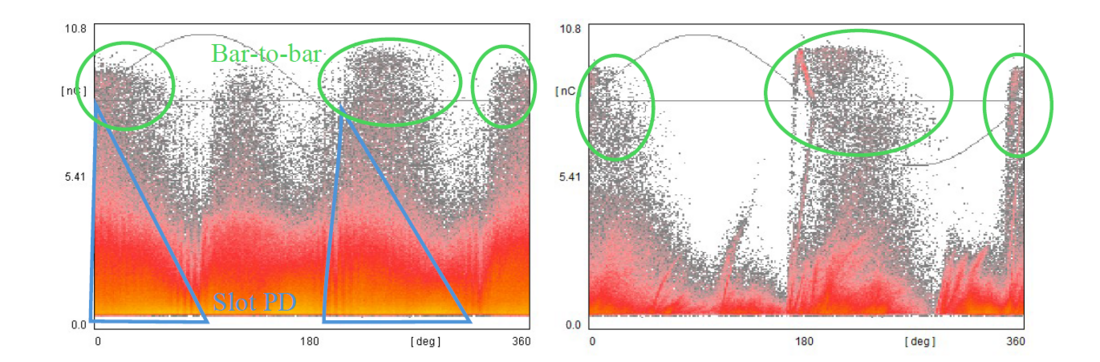
Figure 1 – PRPD pattern for phase B of machine 7 before (left) and after (right) inversion
In general, three of the features that must be considered in the analysis of the PD activity, are the nature of the discharge (from pattern recognition), the maximum amplitude (Qmax), which is an indication of the largest void present (regardless of its nature) and the apparent discharge current (NQS), which is related to the global energy eroding the insulation. Note that for the same Qmax and NQS, the degradation rate can differ from one type of discharge to the other.
3.1. Maximum amplitude and apparent current comparison
A first level analysis is done by comparing before and after values for Qmax and NQS in every cases. The Qmax (nC) and NQS (μA) values just before the inversion and for the first measurement right after, were extracted from the PRPD patterns. Figure 2 Compares the Qmax after inversion as a function of the Qmax before for the eleven machines in the previous section. In this figure each machine is represented by a triangle, whereas the extracted values for each phase windings are the vertices of the triangle. The black line in the graph corresponds to a neutral effect, when the before and after values are equal. Any coordinate below this line indicates an improvement after inversion, whereas any values above the black line indicates that activity was worse after the inversion. As can be seen, most Qmax values, regardless of the nature of the discharges, were lower than before inversion, except for one of the phase windings of machines 1, 6 and 7 (this phase for machine 7 is the one in Figure 1) and two of the phase windings of machine 8. The improvement in Qmax was not significant in a few cases but for most of the phase windings in this graph there was a substantial reduction in amplitude.
A similar analysis of the apparent discharge current is illustrated in Figure 3. Since the decrease of the NQS was usually much greater than for Qmax, a semilogarithmic scale is used in the graph and thus the neutral effect curve is not a straight line anymore. Only two of the phases of machine 6 and one phase of machine 8 had larger NQS right after inversion. For all other machines the reduction in apparent current was considerable, resulting in slower degradation rate from PD attack after the inversion procedure.
This macroscopic analysis gives a quick overall view of multiple machines, but in order to get more insight, it is mandatory to look at the before and after PRPD patterns as well as the results from other diagnostic tests as we will see in the following section.
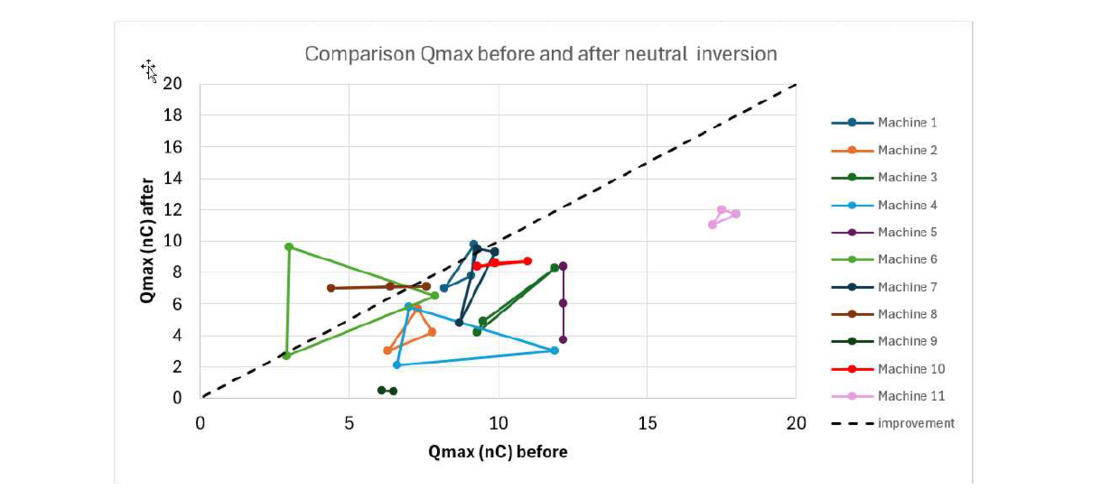
Figure 2 – Qmax (nC) after inversion as a function of the values recorded before
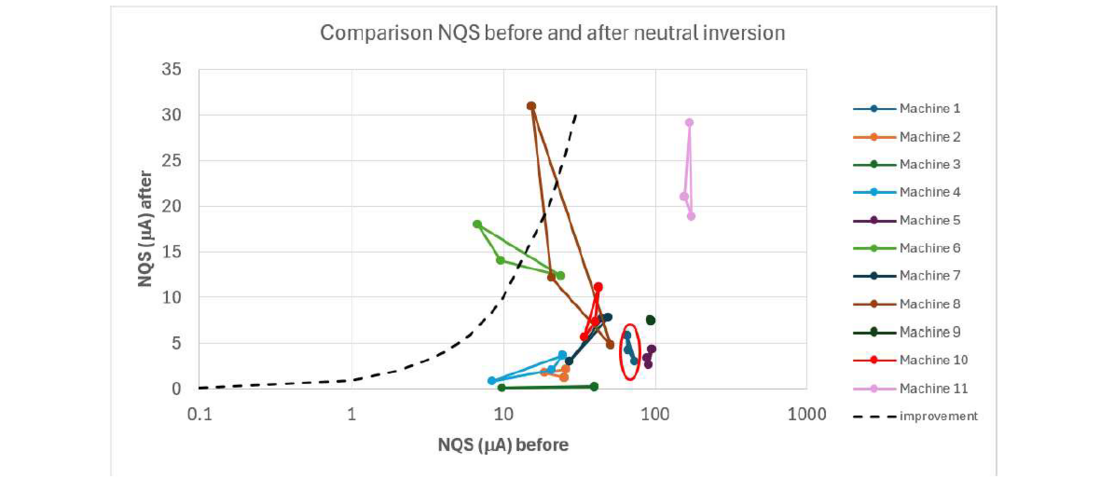
Figure 3 – NQS (A) after inversion as a function of the values recorded before
4. Case study
This section will present some of the main features of the detail diagnosis for two of the machines in Table 1. The case of machine 1 showed marginal changes in Qmax but a major improvement in NQS. The second case is the one of machine 4 which was one with the best success after inversion of all machines in Table 1.

4.1. Machine 1
Machine 1 operated for 12 years before its first PD measurement. The PRPD patterns revealed intense slot discharge activity as illustrated in the left-hand side in Figure 4 for phase A. All three phase windings had similar activity. We don’t know if this activity was present for most of the machine’s life, but if it was the machine had a high failure risk. Has seen in the figure, the maximum amplitude is similar before and after inversion, but the currents are much lower after the inversion. This is coherent with the data in Figure 2 and Figure 3 where the NQS (circled in red) are associated with a much slower degradation rate after the inversion. If only the Qmax (or Qiec used by others) criteria is considered both activities would be considered equal, but they are not, and the inverted machine was much more reliable because it degraded slower. The significant improvement in NQS did buying time to plan a rewind or replacement of the machine, but the fact that small slot PD is still present after the inversion (see highlighted portion in blue of the PRPD) an increase over time was expected. In addition to slot PD discharges fewer bar-to-bar discharges are also present at high magnitudes.
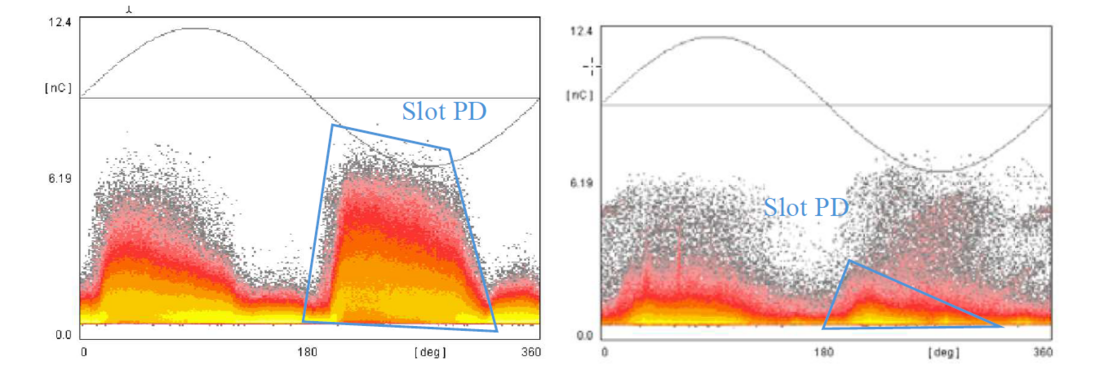
Figure 4 – Intense slot discharge activity on phase A of machine 1 before inversion (left) and
reduction after inversion (right)
It should be mentioned that it was the first contact of the machine’s owner with PD measurement, and he had some reservation about the diagnosis and the actual condition of the generator. Thus, it was recommended to closely trend the PD activity and carry out off-line measurements whenever possible and do a visual inspection and a UV inspection of the end winding.
The visual inspection revealed traces of white deposit from discharge activity just outside the slot as illustrated in Figure 5 (left). When the stator was energized with an external voltage source to its nominal voltage, discharges were observed with a UV camera (Figure 5 (right)) at the same location and also coming out of the first few vent ducts of the stator core. Further away in the core the observation angle was too sharp to see the slot PD, but it was suspected they were active all along the length of the core. This data convinced the owner to plan for the replacement of the stator even though the machine only was 13 years old in the meantime an inversion was done.
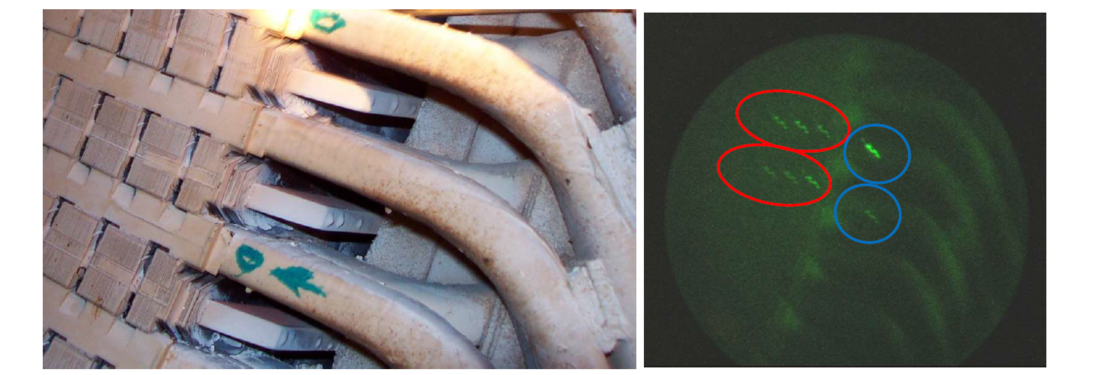
Figure 5 – Visual sign of slot PD at the core exit (left) and UV observation of the slot PD (right)
The close trending of the PD since the first measurement in 2004 is depicted in the graph in Figure 6. The first period in this graph is when no partial discharges were measured. The second one is from 2004 to the inversion in one year later. The third period is the one which lasted 3 years after inversion and the final period is after the stator winding was replaced. Since there was no PD measurement in the first part of the machine’s life, it was thus not possible to estimate adequately the end of life but because of the intense slot PD (Figure 4) the inversion was a sound decision. During the three years following the inversion, Qmax did not show any change because it only gives information about the largest discharge not all discharges. The NQS was a better indicator of the global energy of the discharge, as can be seen in the right part in Figure 6. The initial reduction in NQS due to inversion, improved the machine’s reliability, but as expected, the slot PD started to degrade the insulation and increased to a point where the replacement of the stator was recommended. The replacement was done when the machine was 16 years old. After replacement of the stator, the discharge current (NQS) was low and stayed low. The same was observed for Qmax for two of the phase windings, the third one increase quickly.
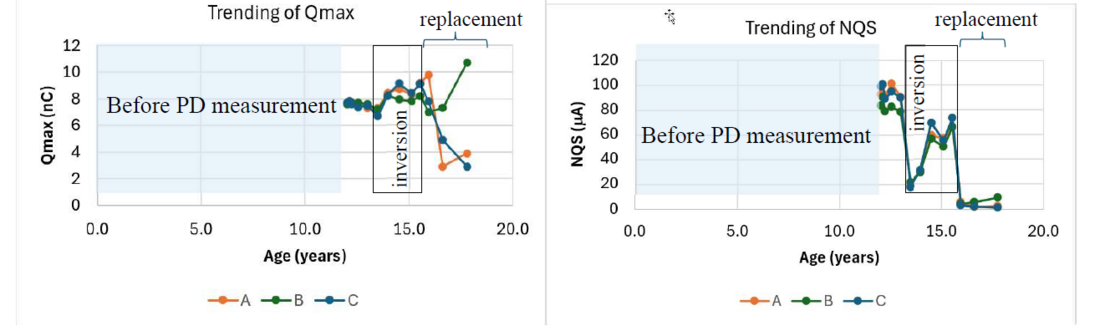
Figure 6 – PD trending of the maximum amplitude (left) and of the discharge current (right)
The analysis of the PRPD patterns after the stator winding was replaced is illustrated in Figure 7. It shows that phase A was only affected by small internal PD, while gap type discharges in the end winding was active on phase B and formed horizontal clusters in the PRPD pattern. In addition, some corona discharges at the junction of the stress grading system were present and are responsible for the asymmetry in the underlaying pattern. Those two types of activity are less of a concern than slot PD present before the replacement and can be corrected in the future if necessary.
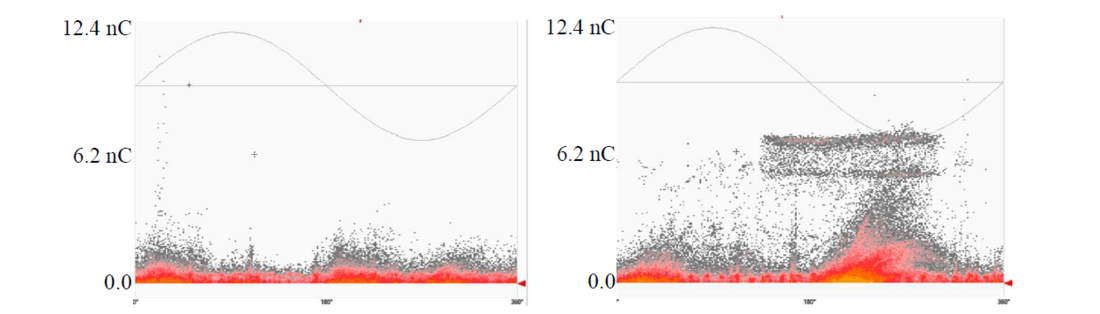
Figure 7 – PRPD patterns after stator winding replacement of phase A (left) and phase B (right)
4.2. Machine 4
Machine 4 gave high Qmax and NQS before its inversion in 2021 and at the time the machine was 16 years old. The visual inspection of this motor revealed signs of intense discharge attack at the slot exits as can be seen in Figure 8 and suggests that slot PD was active all along the length of the slot. In fact, a thick filler gage could be easily inserted at the slot exit between the coils and the core.

Figure 8 – Extensive degradation at slot exits from PD attack of machine 3 after 16 years
This machine, suffering from intense PD degradation, was a good candidate for inversion. To make sure that thermal degradation was not an issue, a PDC test was performed off-line, and the results are presented in Figure 9. The depolarization current was intermediate according to our database and suggested that thermal degradation of the ground wall insulation was not a major issue.
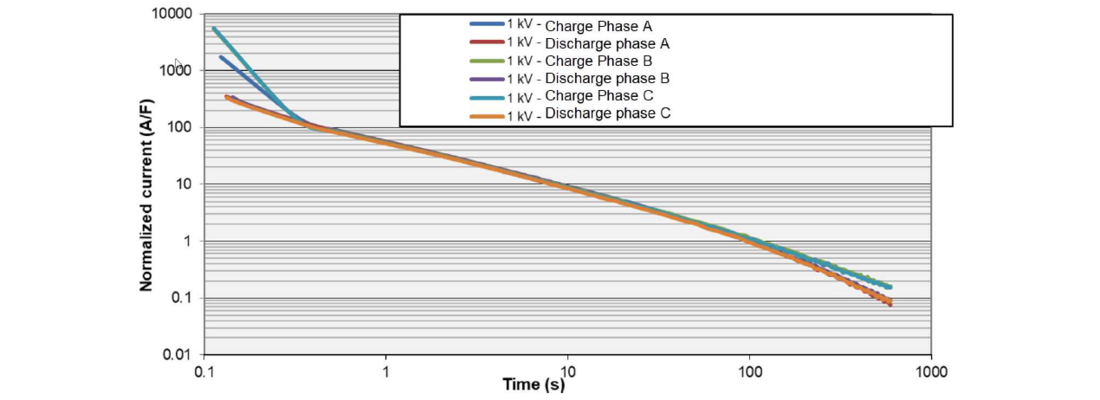
Figure 9 – PDC test of machine 4
The PRPD patterns recorded before inversion are coherent with the degradation signs observed during visual inspection as shown in the left-hand side in Figure 10 and Figure 11, for phase A and C respectively. After inversion, there was a significant decrease in NQS on all three phase windings and of the Qmax on phase A and B. However, the maximum amplitude of phase C, as illustrated in the PRPD pattern in the right-hand side in Figure 11, is almost as high as before but this maximum amplitude after inversion comes from the rabbit-ear shape in the pattern, also present on phase A but at lower amplitudes. This pattern is typical of discharges occurring in virgin voids never exposed to high voltage. Such activity can decrease after months of operation and regular measurements of PD will better tell how long this motor can operate before rewinding it.
Trending of machine 4 started one year after its commissioning. The evolution of Qmax and NQS are illustrated in Figure 12 and include the post inversion period. The maximum amplitude was high on two of the phases for all its lifetime and increased on phase B from 2019 to 2020. The apparent current was low at commissioning but after two years in operation it started to increase steadily on the three phase windings but to much higher levels on phases A and C. This high level PD activity resulted in significant cumulative degradation. The aging factor is greater than what it should be for normal aging and after 16 years of operation the machine was already in its wearing out period. Immediately after the inversion, the NQS currents were small and remained at these levels thereafter, resulting in much slower degradation rate than before and consequently there was a significant increase of the motor’s reliability. Because of this, four years after inversion, there is no rush to rewind this machine, as long as PD activity stays low.
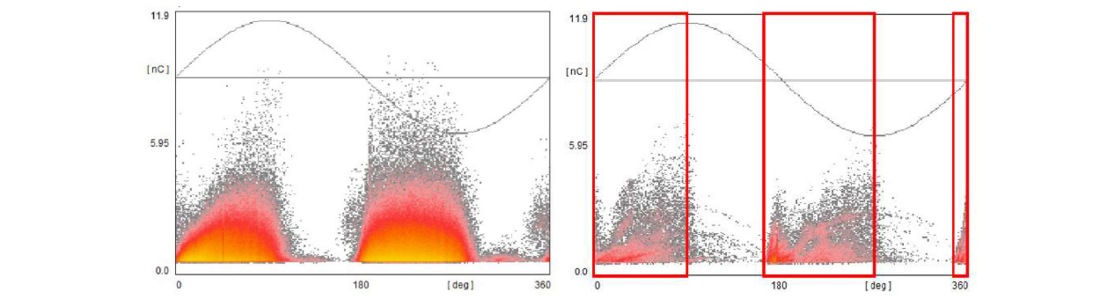
Figure 10 – Slot PD of phase A of machine 4 before inversion (left) and internal PD after (right)
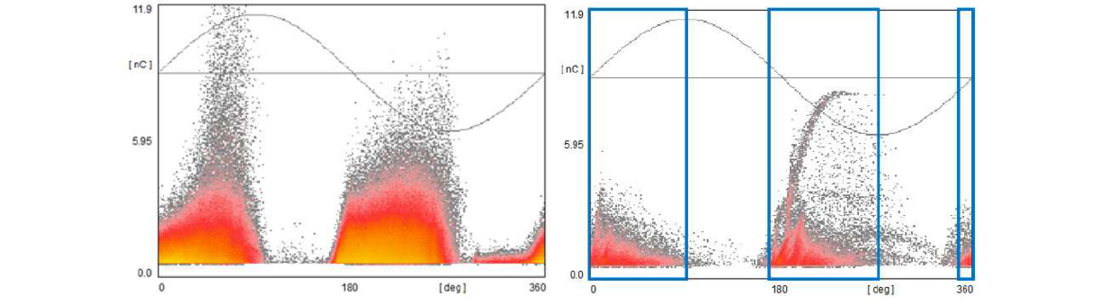
Figure 11 – Slot PD of phase C of machine 4 before inversion (left) and internal PD after (right)
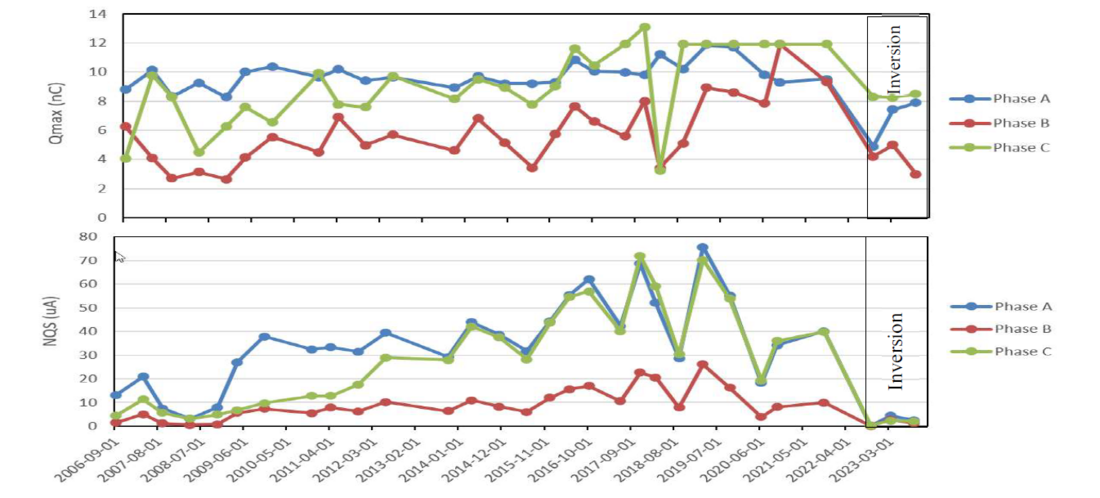
Figure 12 – Trending of PD before and after inversion, Qmax (top) and NQS (bottom)
5. Conclusion
We have seen that inversion of the neutral with the phase leads can be beneficial for increasing reliability and extending life expectancy of rotating machines, especially when their dominant degradation mode is intense PD activity. However, complementary tests, such as a thorough visual inspection and PDC measurement, must be used to confirm the diagnosis that other stresses are not prominent and make sure the inversion will not reduce the reliability of the machine. Trending of the PD measurement before inversion can be used to estimate the degradation rate and a related aging acceleration factor. This is used to determine the best time to perform the inversion. After inversion, PD trending will also show if there was an overall decrease in activity and if the benefits maintain over time.
Each case has to be evaluated individually, but from the two-case study detailed herein we have seen that a diagnosis based on the maximum amplitude can sometime be misleading if it is not combined with PRPD source recognition and quantification of the apparent PD current. In many cases the amplitude did not change much after inversion, but the shape of the PRPD pattern did change considerably and most of the time it was associated with a change in the nature of the discharges. The decrease in apparent discharge current (NQS) revealed to be a much better indicator of the degradation rate of the ground wall insulation. In most cases the machine’s life can be extended for a few years, giving users sufficient time to plan a rewind. However, in the best cases, when activity is much lower and remains low after inversion, machines can last much longer than in a non-inverted condition, for example machine 5 operated for ten years before it was finally refurbished. We think that longer extensions are achievable.
We have to point out that one of the concerns in the industry to perform inversion is that after it is carried out, some of the weaker coils or bars will now be on the neutral end of the machine. If ever a line-to-ground fault would occur it could develop into a line-to-neutral failure and depending on the ground protection scheme this may lead to serious damage. However, the probability of such an event is limited and none of the machines where we have implemented inversion have experience such failure.
References
- Hudon, C., Taghizad, R., Gosselin, G. and Durochat, C., “Using Partial Discharge Measurements for implementing Reliability centered Maintenance”, IEEE Elect. Insul Conf. Quebec, June 2023, pp. 248-251.
- Millet, C, Nguyen, D.N., Lepine, L. Belec, M., Deziel-Lessard, D. and Guddemi, C., "Case Study - High Ozone Concentration in Hydro Generators," IEEE Elect. Insul. Conf., Montreal, June 2009, pp.178-182.