LCA and ECI as a tool for sustainable procurement
Authors
Garnt SWINKELS, Ronald HENDRIKS - TenneT TSO, The Netherlands

Summary
For the 2GW projects and programme. TenneT TSO used Life Cycle Assessment (LCA) and the Environmental Cost Indicator (ECI) as a method to incentivize sustainability as a criterium in the procurement process and the project phase. In this paper we describe what ECI is, how TenneT used it during the procurement of specific 2GW projects as well as its use in framework agreements.
- We discuss the use of LCA in procurement and discuss the rationale behind using ECI as a single score indicator instead of CO2. There are benefits to just using CO2, as it is simpler and more well-known, but there are risks in shifting environmental impacts instead of negating them. As EU EPD’s commonly calculate 19 environmental impacts, these are weighed into a single-score indicator: ECI.
- We discuss using ECI as a competitive non-financial reward criterion in tenders. This brings in challenges such as keeping a level playing field and creating distinctiveness. We discuss the existing calculation standards and verification procedures we prescribed to enforce this, as well as the lessons we learned in both aspects. We have since developed an ECI Protocol that clears up certain unclarities in the standards and are working with selected verifiers to increase consistency in LCA verification. We have a positive experience with this method and have experienced that contractors have set challenging ECI levels for themselves, resulting in tangible ECI reductions. The method and penalty mechanism has proven robust enough to take action by adding reduction measures when faced with possible overshoots.
- We discuss using ECI as a non-competitive incentive coupled to financial rewards as part of a framework agreement. It is very straightforward and transparent: measures are proposed, evaluated, and either rejected or accepted. The relationship between proposal and payment is therefore very clear. It does bring challenges as we aim to stimulate continuous improvements throughout the framework agreements, both between projects as within them. ECI is not a crucial KPI of projects and financial incentive room is limited. We discuss how we evaluate and prioritise incentive proposals to maximise sustainability improvement. We have a positive experience with this as we have received multiple interesting reduction proposals. We do have concerns with a limited contractual position when no reduction measures are proposed, i.e. the financial reward is not incentivising. Additionally, the pricing of reduction measures is difficult to verify.
- We compare both approaches and discuss the benefits and drawbacks. Based on these comparisons we make recommendations for future procurement applications of LCA and ECI in the grid technology industry.
- A competitive non-financial reward criterion yields the most direct sustainability improvements. This does require setting strict standards around LCA calculations used to ensure a level playing field. We recommend using existing standards and contractual texts as much as possible. The use of reference ECI calculations before tendering allows for calculating required fictive discounts to ensure distinctiveness of the criterion. Ideally both the contracting party and the contractor have experience with LCA, but TenneT and its contractors have managed as first-time movers with help of third-party advisors that did have experience. This can best be applied in specific project tenders. It is difficult to apply on a framework agreement as it requires a fixed scope of work to compete on.
While TenneT has not used ECI as a non-financial reward criterion in its framework agreements, it could be made to work as part of mini-competitions to award individual contracts within a framework agreement. - An incentive scheme offers a less risky way of incentivizing ECI reductions as there is no requirement for a level playing field or distinctiveness of the criterion. It maintains a noticeably clear relationship between measure and cost. It is an effective way to gain experience with ECI calculations and reduction measures. However, there is also no market mechanism for effectively pricing in sustainability measures and hinges heavily on trust and transparency. It works best for framework agreements.
- A competitive non-financial reward criterion yields the most direct sustainability improvements. This does require setting strict standards around LCA calculations used to ensure a level playing field. We recommend using existing standards and contractual texts as much as possible. The use of reference ECI calculations before tendering allows for calculating required fictive discounts to ensure distinctiveness of the criterion. Ideally both the contracting party and the contractor have experience with LCA, but TenneT and its contractors have managed as first-time movers with help of third-party advisors that did have experience. This can best be applied in specific project tenders. It is difficult to apply on a framework agreement as it requires a fixed scope of work to compete on.
Keywords
Environmental Cost Indicator, Corporate Social Responsibility, Sustainability, Sustainable Procurement, Life Cycle Assessment, ECI, LCA, CSR1. Introduction
TenneT is a leading European electricity transmission system operator (TSO) with its main activities in the Netherlands and Germany. With over 23,500 kilometres of high-voltage connections it ensures a secure supply of electricity to 42 million end-users. TenneT is one of Europe’s major investors in national and cross-border grid connections on land and at sea, bringing together the Northwest European energy markets and driving the energy transition.
Our societal goal is to contribute to make Europe a climate neutral continent by 2050 and achieving the UN Sustainable Development Goal (SDG’s). It’s our mission to deliver Target Grid 2045 [1], while operating within planetary and social boundaries and driving sustainable change together with our stakeholders. Although the urgency to develop a zero-carbon energy system has never been greater, we also must develop our infrastructure in a sustainable manner. That means being responsible in the materials we use to create our assets and ensuring our infrastructure delivers long-term value for society. We have long-term ambitions for human rights, circularity, the climate and nature, each of which is connected to a specific SDG. As such, we make sure responsibility is woven into everything we do.
These ambitions cannot be met alone, but we need our whole supply chain to achieve this. To stimulate sustainable solutions in line with the TenneT strategy and ambitions also our procurement strategy must be aligned. The Most Economically Advantageous Tender (MEAT) is a method of assessment that can be used as the selection procedure, allowing the contracting party to award the contract based on aspects of the tender submission other than just price. An aspect in contract awarding can be sustainability/CSR criteria. In the past those criteria were often qualitative and that made the comparison between different tenderers difficult, time consuming and/or subjective.
A method TenneT is starting to use more and more often is the Environmental Cost Indicator (ECI) to standardize the environmental impacts of a product or process across its entire life cycle as a way to quantify and compare in procurement processes
In this paper we describe the ECI methodology and the way TenneT has applied this both in tenders as well as in framework agreements. We discuss the results of these applications and the advantages and disadvantages of both. We base this both on our own experience as well as feedback we have gathered from a questionnaire to our contracted partners in the 2GW program.
2. Description of the ECI methodology in TenneT context & EU standardization
The Environmental Cost Indicator (ECI) methodology is grounded in the principles of Life Cycle Assessment, a standardized framework for evaluating the environmental impacts of a product or process across its entire life cycle. From raw material extraction to end-of-life disposal, LCA seeks to quantify and assess a wide array of environmental indicators, including greenhouse gas emissions, resource depletion, and human toxicity. Mantilla et al. (2024) wrote a good introduction on the working and application of LCA’s [2]. However, while giving a relatively complete assessment of many environmental impacts, LCA and by extension ECI is less suitable for other impacts. For example, local biodiversity effects are poorly represented, and social aspects such as human rights are not at all part of a (traditional) LCA.
The ECI is rooted in the Dutch Environmental Performance Assessment Method for Construction Works, a Dutch calculation method that defines how environmental performance is measured for materials, products, and building elements. This method adheres to European norms and standards, particularly EN 15804, which provides core rules for the development of Environmental Product Declarations (EPDs) for construction products [3]. EN 15804 ensures a consistent framework for assessing environmental impacts across the entire life cycle, while the NMD Bepalingsmethode adapts these principles to the Dutch context by incorporating specific impact categories, regional priorities and weighting into a single-score indicator [4].
This aggregation of environmental impact indicators into a single numerical score is a distinctive feature of the ECI methodology. These indicators encompass a wide range of environmental effects, such as climate change, acidification, eutrophication and ecotoxicity (Table A5). Using predefined weighting factors, the methodology translates the relative significance of these impacts into a unified metric: the Environmental Cost Indicator. This score is expressed in monetary terms (euros per unit of product or service) to simplify comparison and interpretation. However, due to a lack of inflation correction ECI values should not be directly compared to actual monetary cost.
Benefits of the ECI Methodology:
- By condensing multiple environmental impact categories into a single score, the ECI methodology allows stakeholders to quickly evaluate and compare the environmental performance of alternatives. This simplification can be especially valuable in complex decision-making contexts, such as public procurement or product design.
- The ECI’s comprehensive coverage of 11 (EN 15804+A1) or 19 (EN 15804+A2) environmental impact indicators ensures a broad assessment of environmental consequences. This avoids the pitfalls of focusing solely on one dimension, such as CO₂ emissions, and captures trade-offs between various environmental domains.
- The ECI’s standardized approach facilitates its integration into procurement processes, enabling organizations to incorporate environmental costs alongside traditional financial considerations. This encourages suppliers to adopt more sustainable practices and innovations, without prescribing one method of doing so.
Drawbacks of the ECI Methodology
- The methodology relies on weighting factors to determine the relative importance of each environmental indicator. While these factors are often based on quantified environmental costs, they introduce an element of subjectivity that can influence the final score.
- The aggregation of diverse impacts into a single score may obscure underlying trade-offs. For instance, a product with high climate change impacts but lower acidification might receive a similar score to one with opposite characteristics, potentially complicating nuanced decision-making.
- Environmental impacts can vary significantly based on geographic and temporal contexts. The ECI’s standardized approach may not adequately reflect regional variations in environmental priorities, such as water scarcity or local biodiversity.
3. Description of application of ECI in tenders
Besides lowest price it is fairly common to reward other non-financial criteria to stimulate quality and encourage aspects that can generate the most added value. Sustainability can be one of those criteria and at TenneT it is fairly common to have sustainability as a rewarding criterium (Figure 1).
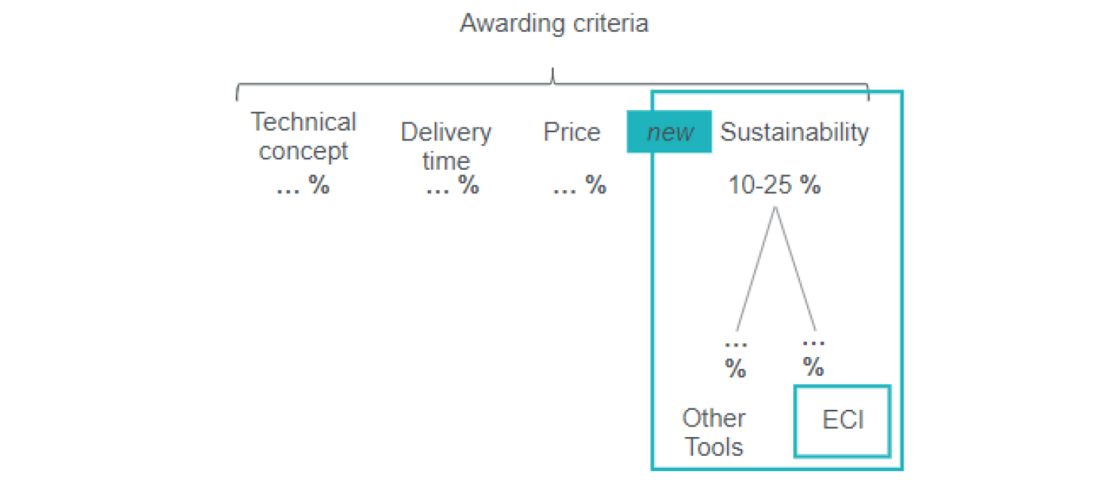
Figure 1 – Sustainability as one of the award criteria, of which ECI can be the only or one of the sub-criteria
The ECI calculations are based on EN15804+A2. We have detailed this further for our own practices with a TenneT ECI protocol which specifies a bit further the methodology to be applied for tenders. How to deal with mass balancing, and how to deal with grid losses are described in the protocol.
For ECI TenneT calculates the upper and lower limit themselves. In this way we can define the scope of the LCA and the cut-off criteria, for example which phases are included (decommissioning and/or operational phase), and what are the boundaries for the calculations, only the asset which is bought or also system optimalisations?
As TenneT we also make ECI calculations to define the upper limit to see what is the ECI with all the requested requirements but without any additional measures and to define the lower limit with all possible measures reasonably imaginable.
Then the supplier can make their own calculation in a provided ECI template, in the same way as TenneT defined the upper and lower limit. With their outcome we can simply define the ECI score which is part of the MEAT discount that can be awarded (Figure 2).
Figure 2 - Calculation of the awarding score
In this way a comparison between different suppliers can be made and the percentage of the prescribed fictive discount can be calculated and awarded (Figure 3).
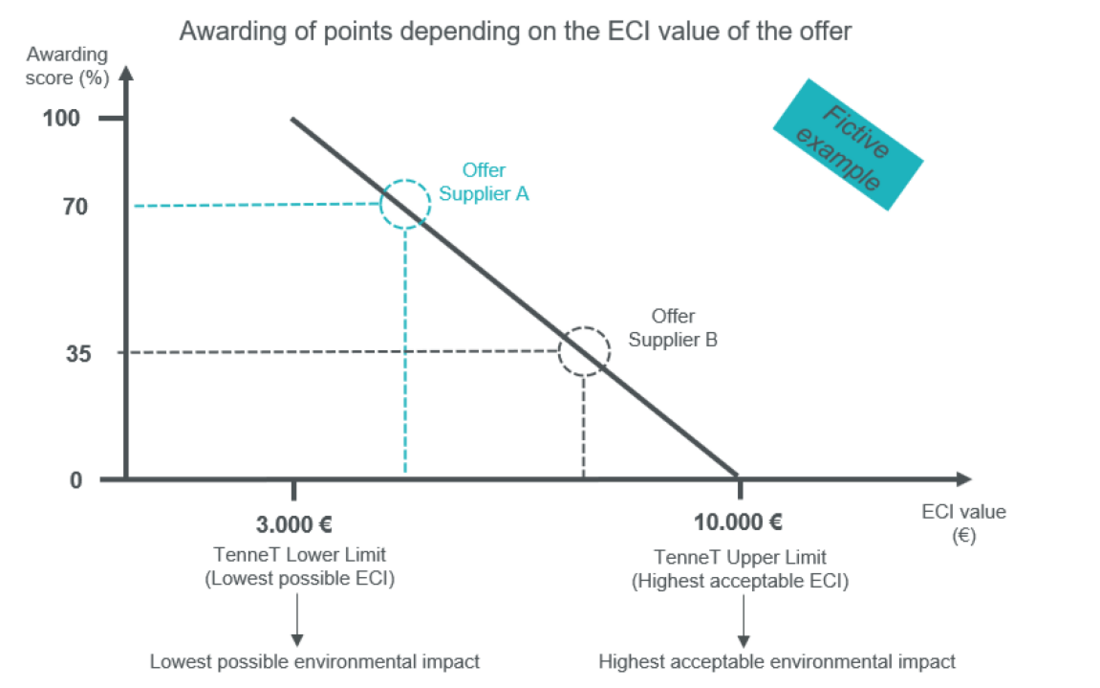
Figure 3 – Comparing competitive ECI values and associated awarding score
If we use above figure for a fictive example it can look as follows (Table 1); in this example the maximum fictive discount is set at € 20.000,- for the lower limit ECI of 3.000,-:
| Tenderer | Offer | Awarding score because of ECI | Fictive discount (100% = € 20.000,-) | Most economically advantageous offer |
|---|---|---|---|---|
| A | €55.000,- | 70% | €14.000,- | €41.000,- |
| B | €50.000,- | 35% | €7.000,- | €43.000,- |
So, although the offer of tenderer B is 10% higher, because of the lower ECI -and the higher fictive reduction it earns because of that-, tenderer B has the most advantageous offer. But the example also shows that it is important that the discount you can get, is aligned with the offers you can expect. When the fictive discount is too low, there is no incentive to lower the ECI. Then it is still more favourable to only compete on price. But this does not only apply for ECI, but to all qualitative criteria in a tender.
4. TenneT’s experiences in applying the ECI method in Tenders
In order to guarantee a level playing field in a tender, it is necessary to introduce a clear set of rules beyond just the European norm EN 15804. TenneT has developed an ECI protocol to set out these rules. This is developed based on years of experience from the Dutch infrastructure market (mainly by the executive branch of the ministry of infrastructure and waterworks, Rijkswaterstaat), external consultancy, and TenneT-specific additions. The main important topics covered in this protocol are:
- Refers to the NMD Environmental Impact Assessment method
- ECI weighting of impact indicators
- Sets environmental impacts assigned to operational electricity losses in TenneT-assets
- Validity of EPD’s to be used in the calculations
- The use of the ecoinvent database [5]
- Clarification on the use of mass balancing
- Independent verification requirements
- Reporting requirements
In the tender documents on the contract level, we specify:
- Scope of the ECI calculation. Contrary to the spirit of LCA, we commonly do not cover the entire life cycle of the asset. We limit the scope base on what the tenderers have influence on. This generally means the scope is limited to the production, transport, installation and operational energy use, though this may be different based on the contractual context (A1-A5 + B6 of EN 15804 LCA stages). We specify this scope using a table (Table 2).
| ECI Scope | A1 | A2 | A3 | A4 | A5 | B1-B5 | B6 | B7 | C1-C4 | D |
|---|---|---|---|---|---|---|---|---|---|---|
| Cable | x | x | x | |||||||
| Conductor | x | x | x | |||||||
| Non-conductive layers | x | x | x | |||||||
| Packaging | x | x | x | |||||||
| Other Materials | x | x | x |
We have a positive experience with the robustness of this method, which is substantiated in our first project results. We have experienced that contractors have set challenging ECI values as part of their bid. These have resulted in tangible ECI reduction measures in:
- Sourcing of materials; different countries and/or suppliers
- Sourcing of materials; primary material replaced by recycled content
- Manufacturing (energy) efficiency improvements
- Installation (energy) efficiency improvements
- Installation alternative fuels and/or emission-free equipment
However, we have also experienced that these results are not guaranteed. Depending on the weighting ECI has in the total tender awarding score, ECI reduction is not guaranteed to be part of the winning tendering strategy. Even if it is, the ECI reduction does not necessarily have to be challenging for the winning party. With sufficient weighting however, ECI reduction does offer a cost-efficient optimization of rewarding score. There will always be ways to reduce environmental impact that also save costs, or cost very little. These types of measures will almost always be part of an offer using ECI in its awarding.
The most interesting results we have seen in a project in which an ECI value was entered, that proved after tender awarding to be more challenging for the contractor than anticipated in the tender stage. In this case, the contractor opted to take additional sustainability measures in design and sourcing of materials in order to meet the original ECI, rather than taking this to the end of the project to overshoot the ECI value and risk the associated fine. This shows that the ECI method as well as its contractual embedding is robust enough to steer on ECI reduction rather than trying to find gaps in the method or contracts to get out of such a situation.
TenneT has so far not included the end-of-life stages of the Life Cycle environmental impacts. It can be argued that tenderers have impact on this stage through circular design. Ideally this would be accounted for in the awarding. However, it also introduces assumptions on decommissioning and waste treatment procedures 40 to 50 years in the future. To assess this in a fair way requires strict rules on these assumptions, or a remainder variation due to modelling choices. So far we assess the inclusion of end-of-life as too variable and difficult to verify to introduce in our tender. We do make use of raw material passports to cover the circularity aspect on the long term.
5. Description of application of ECI in framework agreements
Since the Dutch and German authorities have ambitious offshore targets for 2030-2050, there is enormous pressure on the supply chain for HVDC grid connection systems: HVDC stations and cables. Between 2023 and 2031, TenneT plans to build and commission 14 offshore wind grid connection systems of 2GW each. To secure capacity in the supply chain TenneT has awarded framework agreements with several suppliers of cables and converter stations. Goals of these long-term partnership were among others long term certainty (capacity, of delivery and for needed investments), standardization and efficient project execution and maximize innovation and improvement. The latter to improve on safety, technology and sustainability.
As part of the 2GW offshore program [6], repetitive call-offs will take place in the course of several years for which a Framework Cooperation Agreement (FCA) is in place. There are some standard minimum requirements on sustainability for all projects. But due to the size and duration of the program, continuous improvements on Corporate Social Responsibility (CSR) related topics are possible. Objective is to reach a as high as possible maturity level for CSR management and ECI management. To achieve these objective each partner makes a CSR roadmap in which it is described how to reach various CSR ambitions and the necessary measures for that purpose during the whole programme. In the CSR roadmap our partners and TenneT together write down the ambitions for climate, circularity, nature and human rights.
In every single project specific sustainability measures can be implemented. The partners can hand in a value proposal to achieve a specific improvement on one of the sustainability fields. TenneT has allocated a specific budget for sustainability improvements and via the value proposal the suggested improvements can be proposed by the partner, and assessed and awarded or declined by TenneT. There is also an agreed intention to share the financial contribution between TenneT and their partner(s).
Value proposals are submitted using a template, in which the cost, cost distribution, ECI reduction, CO2 reduction and other sustainability benefits are clearly presented. Based on this information, TenneT can make an educated decision based on the ECI-price (Euro per ECI), but also supplemented by more well-known factors such as CO2-price. This means we can award value proposals based on pre-defined criteria, making for a consistent process throughout different projects and FCA’s as well as optimizing cost-efficiency. After approval the value proposition becomes part of the project scope.
6. TenneT’s experiences in applying the ECI method in framework agreements
We have limited experience with the application of the ECI method in framework agreements. It has been applied in all our 2GW FCA’s, but due to the long duration of these agreements we cannot yet evaluate the final results. Nevertheless, we have requested feedback on the application so far, and have received and approved the first CSR value proposals. We can share our first experiences:
- The relation between the ECI-reduction and the cost of the measure is very direct using this approach. This is both a benefit and a drawback, as costs are transparent and therefore it is known what the decision will bring about. However, sustainability is generally not one of the core goals of the project, so explicitly allocating budget to this is not something projects are used to.
- The pricing of ECI reduction proposals can be difficult to verify. Transparency on costs of ECI reduction measures is required to arrive at fair cost distributions.
- Received ECI reduction proposals also provide insight into where our partners are headed on their sustainability improvements. This allows us to align our own strategy with that of our partners. This can even be useful when proposals are not yet cost-efficient, but may be so in the future.
- When our other requirements do not yet allow for proposed measures, we can study the consequences of dropping or changing the conflicting requirement for the next projects. In an ECI-tender approach, such proposals would not have been raised.
- The effectiveness of this method is dependent on the experience with the ECI method of both partners, as well as the cooperation between them. We see mainly with our Dutch civil contractors¸ who have worked with this method for other clients in the past, that they have been proposing measures as soon as projects were contracted. For contractors that did not have ECI-experience, the focus was first on doing the baseline calculations and aligning on the method & verification procedure. Value proposals in these projects started up later due to this.
- Application of ECI in framework agreements allows for providing long-term incentives and continuous improvement. For example, in some FCA CSR Roadmaps we have set the ECI baseline of upcoming projects to be at the minimum of the previous projects. ECI reduction proposals therefore will not only affect current projects, but also the next.
7. Comparison and conclusions of both methods of ECI application
We compare both approaches and discuss the benefits and drawbacks (Tables 3 and 4). Based on these comparisons we make recommendations for future procurement applications of LCA and ECI in the grid technology industry.
- A competitive non-financial reward criterion yields the most direct sustainability improvements. This does require setting strict standards around LCA calculations used to ensure a level playing field. We recommend using existing standards and contractual texts as much as possible. The use of reference ECI calculations before tendering allows for calculating required fictive discounts to ensure distinctiveness of the criterion.
- Ideally both the contracting party and the contractor have experience with LCA, but TenneT and its contractors have managed as first-time movers with help of third-party advisors that did have experience. This can best be applied in specific project tenders. It is difficult to apply on a framework agreement as it requires a fixed scope of work to compete on.
- While TenneT has not used ECI as a non-financial reward criterion in its framework agreements, it could be made to work as part of mini-competitions to award individual contracts within a framework agreement.
- An incentive scheme offers a less risky way of incentivizing ECI reductions as there is no requirement for a level playing field or distinctiveness of the criterion. It maintains a noticeably clear relationship between measure and cost. It is an effective way to gain experience with ECI calculations and reduction measures. However, there is also no market mechanism for effectively pricing in sustainability measures and hinges heavily on trust and transparency. It works best for framework agreements.
| Aspect | ECI in Tenders | ECI in Framework Agreements |
|---|---|---|
| Targeted Sustainability | ECI encourages sustainability as a selection criterion during the tender phase, fostering innovation and competition among bidders. | Long-term agreements incentivize contractors to embed sustainability into their operations and project delivery consistently. |
| Market Mechanism | Tenders encourage market-driven sustainability pricing. | Guarantees a direct and transparent relationship between ECI reduction and cost, and allow for identification of not-yet-viable reduction measures. |
| Focus on Impact Areas | Allows focus on key areas of environmental impact (e.g., energy use or materials) early in project planning. | Promotes continuous improvement across multiple projects and ensures alignment with shared sustainability goals over time. |
| Comparability | Standardized ECI metrics enable objective comparison of bids, ensuring fair evaluation of environmental performance. | Framework agreements ensure comparability across projects, enabling progress tracking and cumulative impact assessment. |
| Adaptability | Tenders provide opportunities for testing new methods and piloting sustainability initiatives. | Framework agreements create stability, allowing parties to implement and refine sustainability measures across multiple projects. |
| Aspect | ECI in Tenders | ECI in Framework Agreements |
|---|---|---|
| Market Mechanism | Tenders do not allow for identification of not-yet-viable ECI reduction measures. ECI value in tender needs to be substantial portion of non-financial awarding criteria as well as valuable to the tenderer, while being affordable to employer. Can be difficult to balance. | Framework agreements lack market competition for pricing sustainability, relying on collaboration instead. |
| Scope Limitations | Limited tender scopes may restrict innovative sustainability solutions (e.g., pre-defined calculation sheets). | Long-term agreements may lack enforcement of specific sustainability targets if not clearly defined upfront. |
| Complexity | Calculating ECI during tenders can be resource-intensive, especially for smaller bidders or those without expertise (e.g., EPDs/RMPs). | Framework agreements require sustained collaboration and commitment to achieve long-term goals, which can be challenging to maintain. |
| Unclear Targets | Lack of predefined thresholds in tenders can lead to uncertainty about what level of sustainability is "good enough" (i.e. <10.000 ECI threshold is deemed sustainable for project) | Without clear roadmaps or project goals, framework agreements may struggle to translate ambitions into measurable outcomes. |
| Consistency | Variability in how ECI is applied across departments or tenders creates inconsistencies in expectations and results. | Long-term agreements require clear mechanisms for monitoring compliance and progress to prevent sustainability goals from being overlooked. |
8. Recommendations for the future
Based on our experiences with ECI in both tenders and framework agreements we have the following recommendations:
- Use ECI to its advantage
- ECI is best suited for direct comparisons of different tenderers and/or reduction proposals
- ECI encompasses a broader scope of sustainability topics, alongside CO2
- ECI does not encompass the full CSR scope. Other topics such as Human Rights and Nature/biodiversity should still be addressed separately
- Use non-financial reward criteria in tenders for direct sustainability improvements:
- Competitive reward criteria drive tangible sustainability measures but require strict LCA calculation standards and predefined ECI targets to ensure fairness and comparability.
- Reference ECI calculations before tendering can help establish clarity in terms of ECI scope definition
- This approach works best in specific project tenders with a well-defined scope.
- Incorporate ECI in framework agreements:
- Make sure there is a pre-defined CSR budget and key stakeholders are on board (project/program directors, corporate policy, etc.)
- Negotiate a cost-distribution with the partners to ensure shared responsibility and motivation
- Incentive schemes are less risky, as they do not depend on a level playing field or strict comparability.
- Incentive schemes maintain a clear relationship between cost and sustainability while fostering trust and transparency.
- Mini-competitions within framework agreements can use ECI criteria to ensure sustainability pricing through a market-based approach.
- Develop LCA and ECI expertise across stakeholders:
- Both contracting parties and contractors should gain experience with LCA and ECI methodologies. Where expertise is lacking, third-party advisors can provide essential support.
- Standardize methodologies using existing LCA standards and contractual texts to reduce complexity and promote consistency.
- Create EPD’s of key products and collect EPD’s of key suppliers to build up a database of LCA information that can be used in ECI projects.
Appendix
| Environmental Impact Category | Unit |
| Climate change - total | kg CO2-eq. |
| Climate change - fossil | kg CO2-eq. |
| Climate change - biogenic | kg CO2-eq. |
| Climate change - land use and land use change | kg CO2-eq. |
| Ozone Depletion | kg CFC-11-eq. |
| Acidification | mol H+-eq |
| Eutrophication aquatic freshwater | kg P-eq |
| Eutrophication aquatic marine | kg N-eq |
| Eutrophication terrestrial | mol N-eq. |
| Photochemical ozone formation | kg NMVOC-eq. |
| Depletion of abiotic resources - minerals and metals | kg Sb-eq. |
| Depletion of abiotic resources - fossil fuels | MJ, net cal. Val. |
| Water use | m3 world eq. deprived |
| Particulate Matter emissions | disease incidence |
| Ionizing radiation, human health | kBq U235-eq. |
| Eco-toxicity (freshwater) | CTUe |
| Human toxicity, cancer effects Potential | CTUh |
| Human toxicity, non-cancer effects | CTUh |
| Land use-related ipacts / soil quality | Dimensionless (pt) |
References
- Target Grid is TenneT’s vision for a climate-neutral electricity grid on land and sea in 2045 [online - Accessed 11-03-2025]
- Mantilla, M., Prieur, P, Nguefeu, S., 2024, Ecodesign aspects to enhance circularity and boost sustainable solutions through procurement, CIGRE paper 10286
- European Committee for Standardization. (2019). EN 15804:2012+A2:2019: Sustainability of construction works - Environmental product declarations - Core rules for the product category of construction products. Brussels, Belgium: CEN.
- Stichting Nationale Milieudatabase. (2025). Bepalingsmethode Milieuprestatie Gebouwen en GWW-werken, versie 1.2. Gouda, Netherlands: Stichting Nationale Milieudatabase.
- Wernet, G., Bauer, C., Steubing, B., Reinhard, J., Moreno-Ruiz, E., and Weidema, B., 2016. The ecoinvent database version 3 (part I): overview and methodology. The International Journal of Life Cycle Assessment, [online] 21(9), pp.1218–1230. Available online [Accessed 08-01-2025].
- TenneT: The 2GW Program [online - Accessed 11-03-2025]