Results of the International Survey on Earthquake Damage Experience and Seismic Design of Substations by WG B3.64
Authors
Atsushi ETO - TEPCO HD, Japan
Edgar RAMOS CORDERO - Siemens Energy, Germany
Hiroaki SATO - CRIEPI, Japan
Leon KEMPNER JR - BPA, USA
Sheng LI - USTB, China

Summary
The CIGRE Working Group B3.64 was established in 2022 to examine the resilience of substation equipment against earthquake damage and to identify best practices for mitigating disaster impacts. An international survey conducted between October 2022 and December 2023 gathered input from 80 respondents across 21 countries, including utility owners, manufacturers, consultants, and academia. The survey explored topics such as seismic design concerns, reported damages, current practices, and strategies for post-earthquake recovery.
This paper presents key findings and interpretations from the survey, including seismic damage trends, broader impacts, applicable policies and standards, seismic design practices, maintenance practices, and rapid recovery challenges following an earthquake disaster.
Keywords
Earthquake, Damage, Power System, Resilience, Seismic Design, Substation Equipment1. Introduction
In April 2022, the Working Group B3.64 of CIGRE was established to study and contribute to the resilience of substation equipment by identifying damage and best practices during earthquake events in the electric power industry. A key focus of the group is to recognise and disseminate information on mitigating the impacts of disasters caused by seismic activity. This includes providing examples of preventive measures, countermeasures, rapid restoration strategies, and design guidelines in the Technical Brochure titled “Guidelines on Optimising Seismic Design of Substations for Power Resiliency.”
One of the primary outcomes of the WG B3.64 initiative was an international survey aimed at investigating awareness and experience related to earthquake damage, applicable standards, and general concepts of seismic design for substation equipment. The survey was conducted between October 2022 and December 2023, engaging key stakeholders in the power industry, including utilities, manufacturers, academia, and consultants. A total of 80 validated respondents from 21 countries participated, representing regions such as Europe, North and South America, Asia, and Oceania.
The survey was initially intended to target utility companies, considered as the owners and operators of transmission, distribution, and generation facilities. However, manufacturers, consultants, and academia were also included, as they provide valuable contributions to the understanding and implementation of seismic design for substations. Respondents were categorised into two main groups: utility/owner representatives, who comprised 53% of the participants, and consultants/academia/manufacturers, who made up the remaining 47%.
Due to the heterogeneous nature of the survey respondents, the results cannot be considered statistically representative. Instead, they highlight important trends and insights related to the concepts explored in each question. The purpose of the survey report is to identify these trends and provide an overview of collective experiences within the industry.
This paper presents the collected data and offers interpretations derived from analysing the survey results, with the aim of enhancing and deepening the understanding of seismic design for substation equipment.
2. Concerns in the seismic design of substations
The survey began by exploring whether concerns existed regarding the seismic design of substations, either due to prior experiences of damage or as a result of requirements mandated by national safety codes. Figure 1 illustrates the results of this inquiry. Notably, approximately two-thirds of utilities/owners reported having experienced earthquake-related damage to their substations. This finding shows, on one hand, the critical importance of seismic design as a fundamental aspect of power system resilience, and, on the other hand, the pressing need to enhance robustness against earthquakes to minimise damage.
In contrast, the responses from consultants and manufacturers on this topic were considered highly subjective and were therefore excluded from this analysis. This is because these entities do not typically own the assets and are not responsible for continuously monitoring their condition. It is possible, however, that manufacturers and consultants based their responses on reports of equipment damage encountered during their professional activities within their respective organisations.
Figure 1 presents a world map illustrating the distribution of epicentres for major recorded earthquakes of magnitude Mw 5.5 or greater since the year 2000. In addition, the map also shows the locations of survey respondents who answered either “yes” or “no” to having experienced earthquake-related damage in substations. This visualisation shows that respondents reporting earthquake damage are predominantly located in regions classified as earthquake prone.
Furthermore, the survey results suggest that respondents in earthquake-prone areas who reported no damage are primarily distribution companies. These companies operate facilities that are generally considered less sensitive to seismic activity, which may explain their lack of reported damage.
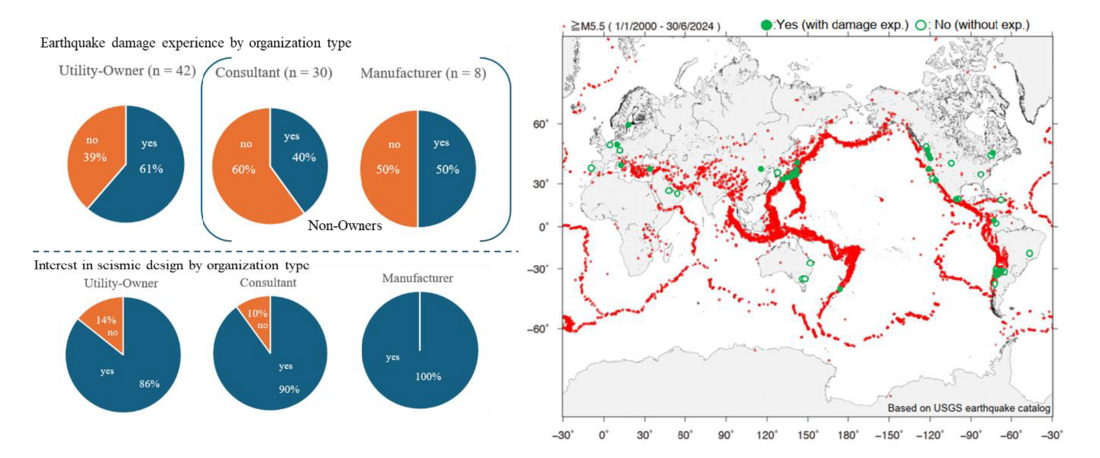
Figure 1 – Earthquake damage experiences by organization type, left: experiences and/or concerns regarding seismic design of substation equipment, right: significant earthquakes (Mw ≥ 5.5) worldwide since the year 2000, overlaid with respondents' damage experiences
2.1. Damages in main circuit equipment
The survey results on equipment types are illustrated in Figure 2, where power transformers emerged as the most critical components, alongside air-insulated interrupters such as disconnectors and instrument transformers. In contrast, robust equipment types, such as Gas-Insulated Switchgear (GIS) and air ducts (e.g., feeder bus ducts), as well as lightweight components like air-core reactors (e.g., filter reactors), reported less damage caused by earthquakes. Equipment not specifically listed was categorised as "other," which included components such as indoor bulk oil metal-clad switchgear, 77 kV oil circuit breakers, and 154 kV neutral grounding resistors.
Regarding voltage classes, generally, the higher the voltage of the equipment, the larger its physical size, and thus, the greater its susceptibility to earthquake-induced damage. Interestingly, most earthquake damage was reported in equipment operating within the 170 kV to 550 kV range. This trend may be attributed to the fact that there are likely fewer high-voltage equipment installations in the field compared to medium- or lower-voltage levels.
Experts from WG B3.64 highlighted that extra-high voltage (EHV) equipment, rated at 550 kV and above, is often designed with enhanced robustness to mitigate its susceptibility to seismic loads. This is due to both its higher vulnerability to seismic motion and the severe consequences of damage to such equipment during an earthquake.
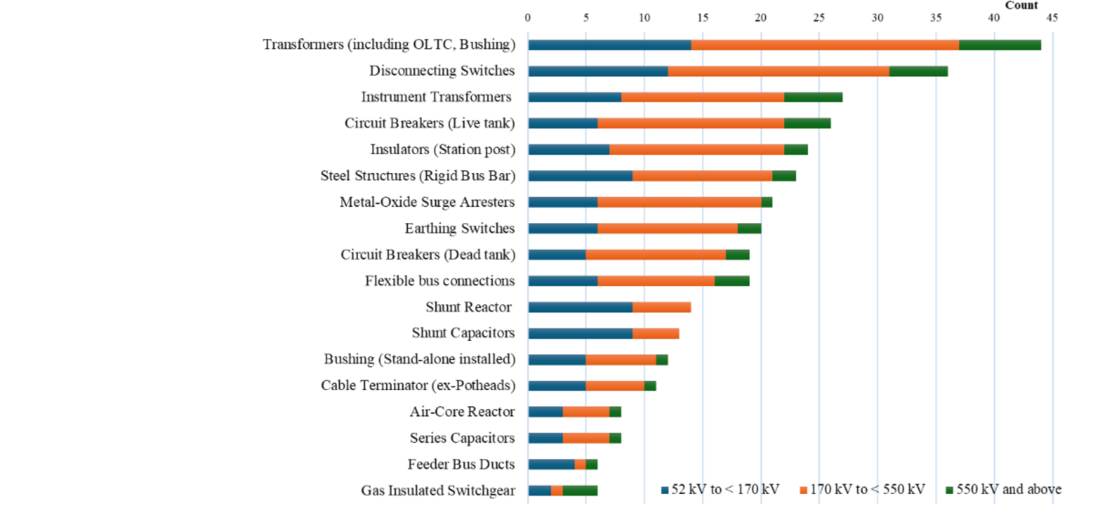
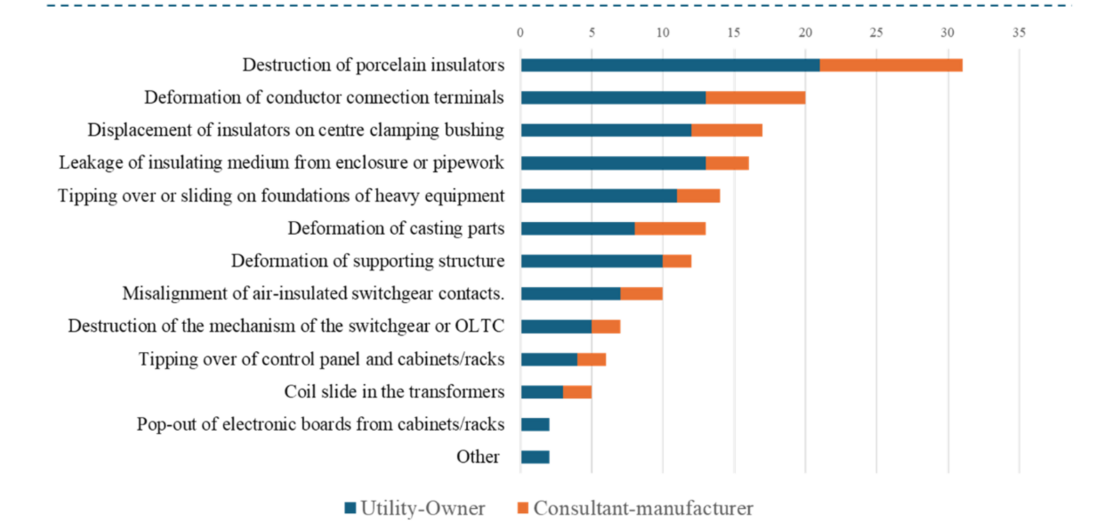
Figure 2 – Reported damages of main circuit equipment, top: recurrence of damage reported by equipment type, bottom: recurrence of specific damage aspects reported
A closer analysis of the survey responses revealed that insulation damage was the most frequently reported issue, encompassing a variety of problems such as the destruction of insulators, displacement of centre clamp bushings, and leaks in insulating mediums. Overhead line terminal deformations were also identified as a prominent failure mode. Power transformers were particularly vulnerable, with common issues including the breakage of foundation bolts, misalignment of centre clamp bushings, and insulator damage.
Under the "Other" category, notable responses included the fragility of "dogbone" dual flexible conductor bus connections and the tie-downs of moderately weighted equipment. Experts from WG B3.64 believe there is a strong correlation between failures in air insulation and overhead line terminals and the incorrect slack design of flexible conductors between interconnected equipment. This suggests that improper slack design may amplify the risk of damage during seismic events.
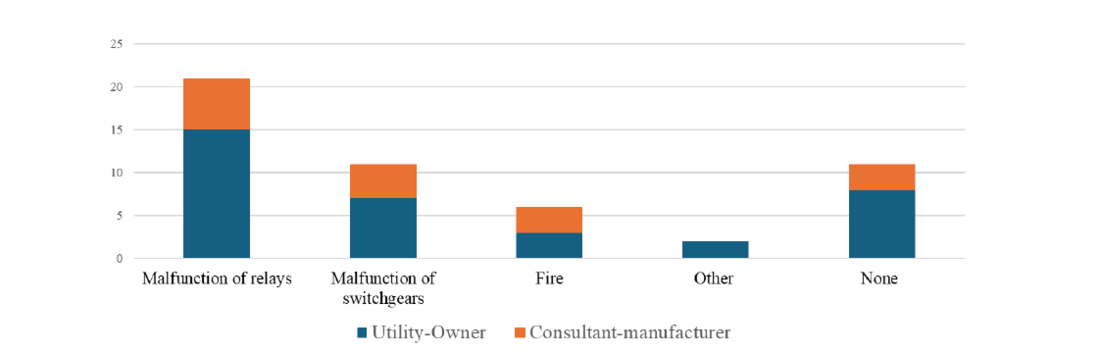
Figure 3 – Functional failure and secondary damage of substations
In addition to the reported equipment damages, their consequences in the substation—such as malfunctions—and the surrounding environment, were also documented, as illustrated in Figure 3. The most observed effect was relay malfunctions, particularly the tripping of transformers caused by faulty mercury Buchholz relays. This was followed by switchgear malfunctions and the occurrence of fires.
2.2. Broader impacts: Buildings, Foundations and Ground Failures
The experiences shared by substation owners extend beyond equipment failures to include damages to buildings, switchboards, fences, and ancillary equipment. Damage to control rooms, relay rooms, and other buildings appears to be a common occurrence. Such structures play a critical role in ensuring the continuous and safe operation of the substation, complementing the functionality of the equipment.
The "Other" category also included reports of malfunctions in transformer mechanical relays due to oil sloshing, as well as damage to firewalls. Additionally, foundations and ground failures were highlighted as significant issues in the report, given their importance in maintaining the structural integrity of substations. Addressing these factors becomes particularly critical during large-scale earthquakes.
As shown in Figure 4, while the number of responses related to ground failures was relatively small, the reported incidents caused extensive damage, including widespread outages. The most prevalent type of ground failure was liquefaction, but other notable issues included ground subsidence, lateral spreading, sand boiling, silt and mud ejection, and water pooling on the soil surface.
The degree of impact caused by earthquake damage on the power supply was documented and categorized into three levels: (1) widespread and prolonged power outages, (2) impacts comparable to those of normal (non-earthquake) facility failures, and (3) no disruptions to the power supply. In this survey, 21 utilities from eight countries provided responses. The results revealed that just over 50% of respondents experienced severe power disruptions due to earthquake damage. These disruptions were primarily reported by utilities in countries such as Chile, China, Japan, New Zealand, and regions along the West Coast of the U.S.A. This highlights the significant concern posed by earthquake-related damages to the power system.
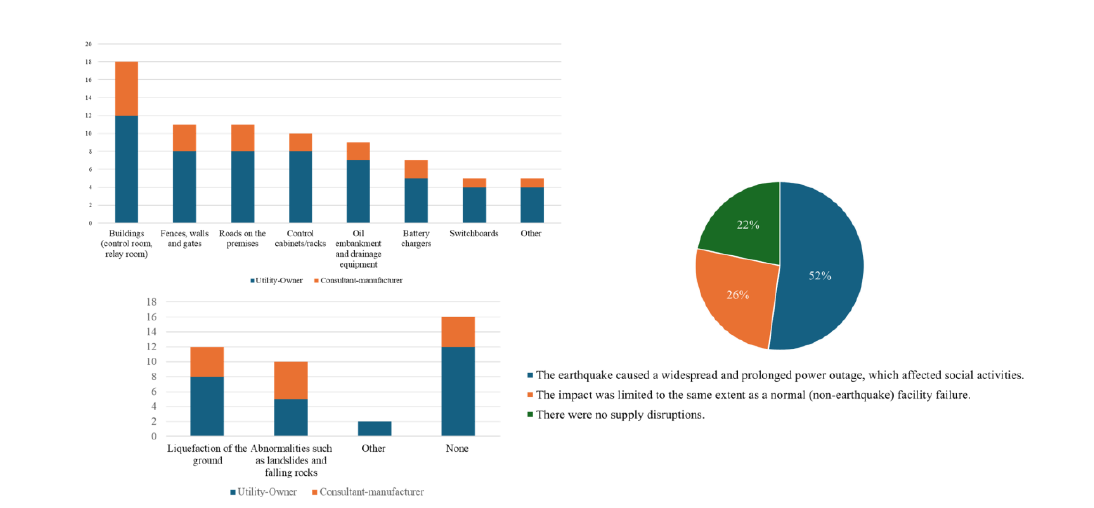
Figure 4 – Broader failures and damages, upper left: damage recurrence to substation facilities, lower left: foundation and ground failures, right: degree of impact of the damage on power supply
3. Policies and standards directed towards seismic resilience
We have also examined current practices regarding the use of national, international, or in-house developed standards to ensure the seismic resilience of substation structures. This is a significant consideration, as the objective is to determine whether there is consistency in the concepts employed to achieve resilience.
Ninety per cent of utility/owner respondents confirmed that their respective countries have guidelines developed by government or regulatory authorities to ensure resilience against seismic hazards. However, on the consultancy (non-owner) side, this percentage drops to 78%. This demonstrates a general trend, suggesting that entities with regulatory authority typically maintain and develop the guidelines used to address seismic hazards. According to the Working Group (WG) experts, seismic hazard models and structural design guidelines for civil structures are generally well-maintained worldwide.
On the other hand, when considering whether there are clearly defined policies specific to the construction, operation, and maintenance of substations (as opposed to general civil structures), a significant gap appears to exist within the industry. Approximately 55 per cent of utility/owner respondents indicated that they use or have earthquake-resistance policies in place. This suggests that the concept is not yet widely adopted and may require further promotion and dissemination across the global power industry.

3.1. Current practices in seismic design
A series of survey questions addressing specific concepts of seismic design, as presented in Figure 5, revealed the following insights:
When establishing target seismic load parameters (e.g., Peak Ground Acceleration), approximately 45% of utility owners rely on seismic zoning maps, 31% use other methods (e.g., prescribed levels from standards such as those referenced in [1] or [2]), and 21% evaluate specific seismic ground motions. In contrast, consultants more prominently utilise seismic zoning maps, with 67% adopting this approach. Approximately 22% adhere to prescribed levels of seismic loading, while only 6% employ evaluations of specific seismic ground motions. The Working Group (WG) experts interpret the higher utilisation of specific seismic ground motion evaluations by utility owners as a reflection of their need to consider risk in greater detail. This approach accounts for the importance of the specific facility, as well as the regional and soil characteristics of the installation.
Regarding standards for the seismic design of substations (e.g., [1] and [2]), it appears that the IEC 62271 series is less commonly used in the industry, whereas the IEEE Std. 693 is more widely applied. This preference is likely due to the IEEE standard’s comprehensive framework for seismically qualifying a wide range of equipment, its robust target qualification levels (e.g., 1.0 g PGA for the high level), and the coordination it provides. Another notable finding is that utilities generally tend to develop in-house standards for seismic design, unlike consultancy firms. Additionally, other national standards play a key role in substation design, although these are often targeted at general civil structures rather than substation-specific equipment.
The survey also explored the reasons why users of seismic design standards choose to develop in-house or proprietary standards, either partially or entirely replacing general standards. The most significant reason cited was that the equipment and local conditions of substations did not align with the assumptions or requirements of general substation seismic standards. This was followed by instances where experienced earthquake damage was not adequately addressed or reflected in the application of these standards.
The reliability of seismic designs is directly influenced by the importance factor applied to motion parameters. This factor is typically linked to the probability of exceedance of a motion parameter over a given period of time, or its corresponding return period. In the survey, we investigated the design considerations currently employed in the industry. The findings indicated that utility owners generally aim for a probability of exceedance of 2% in 50 years (return period: 2,475 years), which is standard for high-importance structures, particularly lifeline infrastructure. By contrast, consultants tend to design for a 10% probability of exceedance in 50 years (return period: 475 years), which is typically associated with ordinary structures of lower consequence in the event of failure. The WG experts believe this discrepancy arises because hazard maps are commonly computed and widely available for a return period of 475 years, and consultants may interpret seismic hazards directly from this information.
Regarding the expected service life of substation equipment, the survey revealed a clear tendency for design with a lifespan of 50 years. However, some utilities specified longer lifespans, such as 70 years or more, particularly for robust steel structures (e.g., line terminators) or gas-insulated switchgear (GIS) equipment.
Some other findings include:
Design for soil liquefaction hazard: Two-thirds of the utility/owners consider this hazard in their substation design, compared to consultants, where only about half responded positively. This indicates that utilities take a broader view regarding the overall responsibility for the substation, whereas consultants might focus on specific components without necessarily addressing issues such as ground failures.
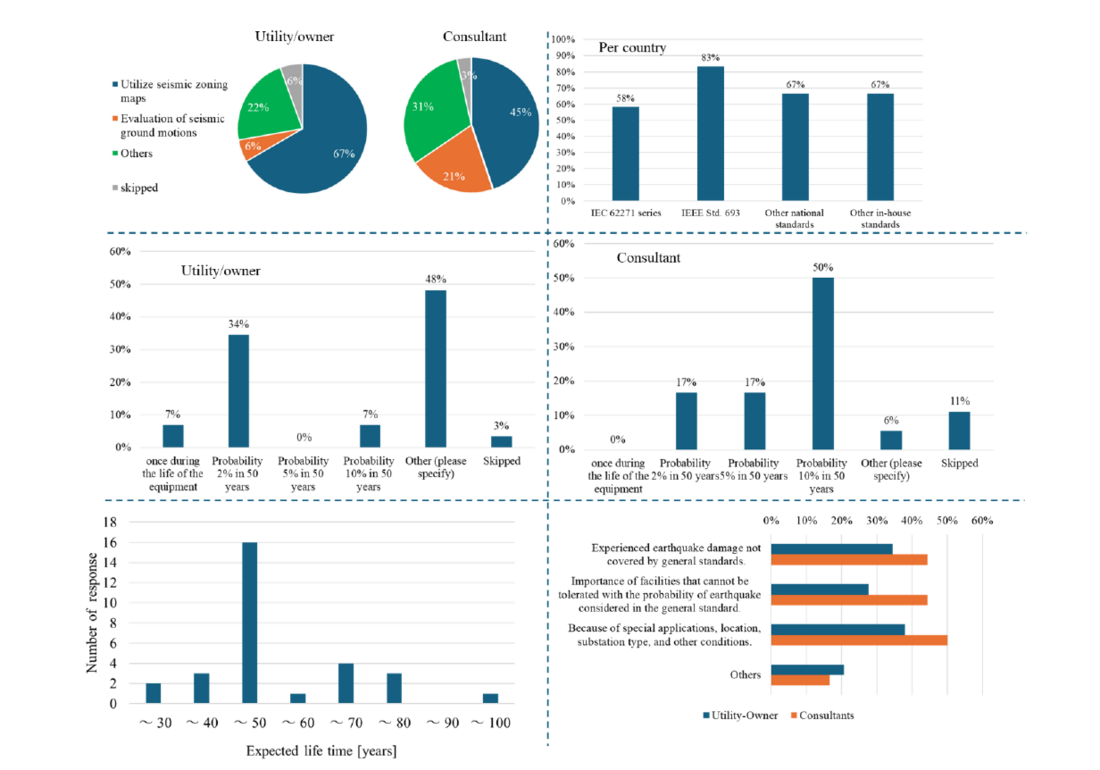
Figure 5 – Current practices in seismic design of substations, upper left: How to determine the target seismic load parameters, upper right: applicable standards for the design, middle left and right: the applied probability of exceedance when determining the strong motion parameters, lower left: the expected service life of the substation equipment, lower right: the necessity of developing in-house standards and the reasons for doing so
Involvement of internal or external consultants in the revision of seismic performance of substation equipment: Approximately half of the respondents indicated that internal consultant reviewers are involved in the revision process. About one-third reported that both internal and external consultants are involved, while nearly 20% stated that only external consultants were involved. This suggests that half of the utilities seek assistance from external engineers, which may, in some cases, be driven by regulatory requirements mandating third-party certification or verification.
Use of building codes versus seismic design standards for electrical equipment to determine seismic design loads: In both cases—utility/owners and consultants—there is a prominent tendency to use standards specifically for the seismic design of electrical equipment when determining design loads. Additionally, utilities often make use of building codes due to the integration of seismic hazard models within them, which can be practical for application.
Use of a response modification factor “R” to account for inelastic responses of equipment in design: Approximately 71% of utilities do not utilise inelastic response factors, whereas 88% of consultants do. This significant discrepancy highlights differences in design philosophy and industry preference regarding reliability. Utilities tend to favour very robust equipment that does not rely on permanent deformations to reduce demands on critical components. Experts from the working group indicated that it is preferable to have equipment capable of enduring very large earthquakes without the need for partial replacement of components after the event.
Enhancing the seismic performance of existing equipment: The preferred method is seismic retrofitting, followed by replacing the equipment with models that offer better seismic resistance. This demonstrates a preference for conserving existing equipment in the field rather than opting for outright replacement.
4. Pre- and post- earthquake maintenance work
Maintaining the healthy condition of substation equipment and facilities is crucial for the resilience of the system. Robust design, together with maintenance before and after earthquakes, should be considered in tandem when ensuring earthquake resilience. The survey incorporated aspects of maintenance, yielding the following results:
Regarding the inspection items that contribute to ensuring the seismic performance of equipment during substation maintenance for earthquake preparedness, the majority of utility/owners keep a record of seismic qualification reports and the locations where the equipment is installed within the substation. This is followed by having educated and trained maintenance staff familiar with best practices for typical seismic installations, such as anchorage and flexible connection requirements. Interestingly, the least number of respondents confirmed the use of a seismic tag (e.g., an IEEE 693-compliant tag) that is clearly visible for inspection and confirms the seismic design level of the equipment it is mounted to.
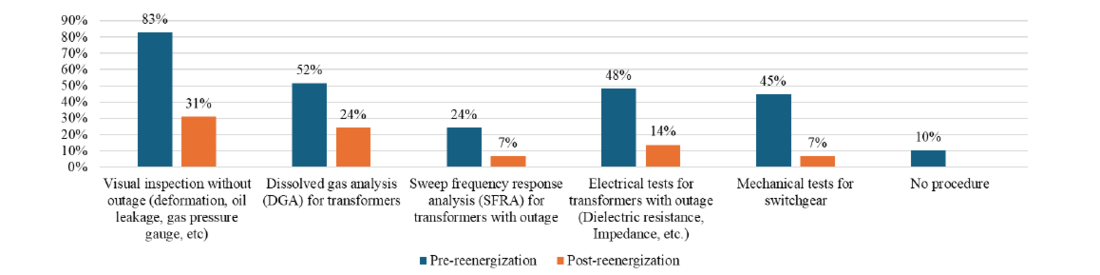
Figure 6 – Results on equipment integrity tests after an earthquake
When it comes to specific practices for diagnosing the integrity of equipment after an earthquake, a visual inspection (when no outage has occurred) is the most common practice, both in pre-energisation and post-energisation conditions. Other frequent practices include Dissolved Gas Analysis (DGA) for transformers, electrical tests for transformers during outages, and mechanical tests for switchgear in the pre-energisation state.
5. Initiatives for rapid recovery from earthquake damage
While it is possible to ensure robust designs for substation equipment, achieving a 100% survivability rate is not feasible. This is why seismic design for disaster prevention, combined with preparation and strategies for rapid recovery, is equally important. The following results are based on input from 20 utility companies.
In terms of aspects that hinder rapid recovery following an earthquake disaster, the most prominent challenge appears to be ensuring safety during restoration work. This is followed by issues related to the procurement and availability of restoration materials, such as spare parts. Securing recovery workers seems to be a lesser concern, while the least-cited issue is the difficulty of ensuring restoration infrastructure. This includes challenges such as rehabilitating roads, ensuring the availability of cranes for lifting, and similar logistical obstacles.

Figure 7 – Ratio of the primary obstacles to rapid recovery
The survey also explored the current preparations being undertaken to expedite recovery in the event of an earthquake and its consequent damage. Securing spare parts for restoration emerged as the most significant preparation among respondents, followed by cooperation agreements among electric power companies. Establishing recovery work procedures ranked next. Conducting recovery training and securing mobile substation equipment were seen as equally important.
It is evident that mobile substation equipment plays a critical role in these recovery plans and should be addressed accordingly.
6. Conclusions
The survey produced important information regarding the earthquake performance of substations and equipment. This data is unique because it was collected from a global community of electric power companies and seismic design consultants. These responses are of great value to the work of WG B3.64 in developing our technical brochure, as well as to the power industry in general. Key aspects include:
Importance of resilience planning: The survey highlights the necessity of integrating robust seismic design with comprehensive disaster preparation strategies to minimize earthquake-induced disruptions.
Components of special vulnerability: Power transformers, high-voltage disconnectors, instrument transformers, and live-tank circuit breakers, along with improperly designed flexible conductors, require special attention in seismic design.
Mitigation of broader effects: Beyond equipment, the structural integrity of substation structures, such as control rooms and foundations, must be emphasized. Ground stability (e.g., liquefaction) should also be prioritized in substation design.
Better coordination of standard and practices: While seismic design of substation equipment is addressed in several comprehensive standards, the survey identified the need for better coordination among these standards. Gaps in existing frameworks have often been addressed through custom in-house standards. WG B3.64 is committed to promoting substation-specific guidelines to address these gaps.
Maintenance and focus on rapid recovery: Regular maintenance, including seismic inspections and post-earthquake diagnostics, is essential for ensuring the integrity of substations. Recovery strategies should prioritize safety and the availability of spare parts. Mobile substation equipment has emerged as a vital element in the recovery process.
References
- IEEE Standards Association. IEEE Std. 693: Recommended Practice for Seismic Design of Substations. New York (USA); 2018
- International Electrotechnical Commission. IEC TR 62271-300. Technical Report. High-voltage switchgear and controlgear – Part 300: Seismic qualification of alternating current circuit-breakers. Geneva (Switzerland); 2006
- The Japan Electric Association, “Guideline for seismic design for electric equipment at substations, etc.” (JEAG 5003-2019. (In Japanese))
- A. ETO, K. YOKOHATA and Y. ISHIKAWA. “Seismic strengthening of large-capacity transformers and methods of diagnosis in the event of a huge earthquake”, CIGRE 2024 Session paper A2-11237, August 2024
- CIGRE TB 445 “Guide for transformer maintenance”